Thermally
Modified Timber
Thermally modified timber or Thermowood® is natural wood enhanced using heat and steam. The process permanently changes how the timber interacts with moisture, improving stability and durability for exterior use without chemical preservatives.
What is Thermally Modified Timber
Thermal modification is a controlled process where timber is heated to high temperatures in a low-oxygen environment. This alters the internal structure of the wood, reducing moisture absorption and improving long-term exterior performance.
Thermally modified timber is sometimes searched for as Thermowood or thermowood cladding. At Corell, thermally modified timber forms the basis of the Avara® cladding range, produced for exterior cladding, screening and outdoor timber applications.
-
Improved durability
-
Greater dimensional stability
-
Reduced moisture absorption
-
No chemical treatment
-
Suitable for exterior use
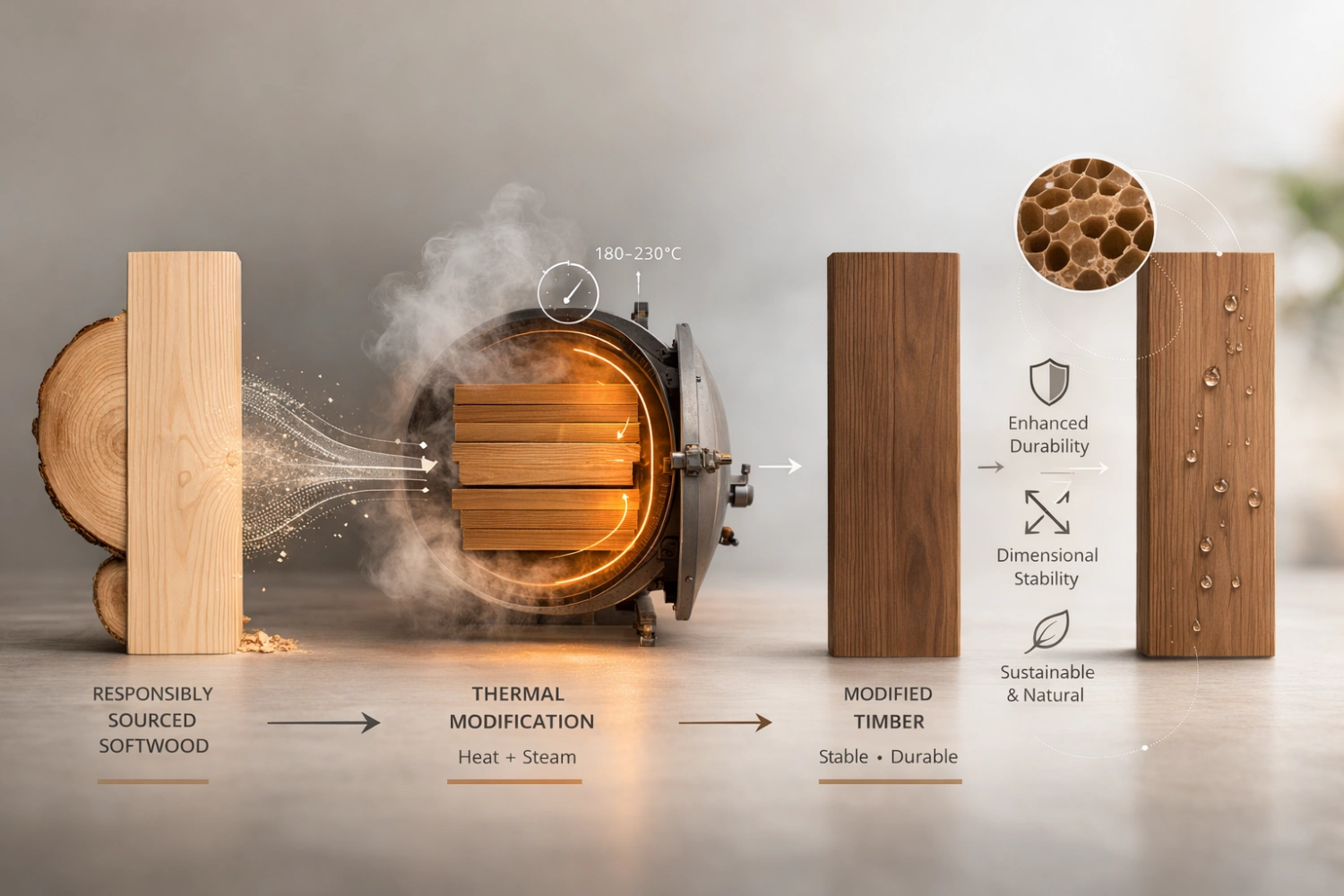
Thermal Modification Process
Thermal modification uses heat and steam to alter the behaviour of the timber through its full cross-section.
Boards are heated to temperatures typically between 212–230°C in a low-oxygen chamber. During this process, the timber becomes less hygroscopic, meaning it absorbs significantly less moisture from the surrounding environment.
The result is a more dimensionally stable material suited to exterior applications where movement and moisture exposure are important considerations.
What changes in the wood
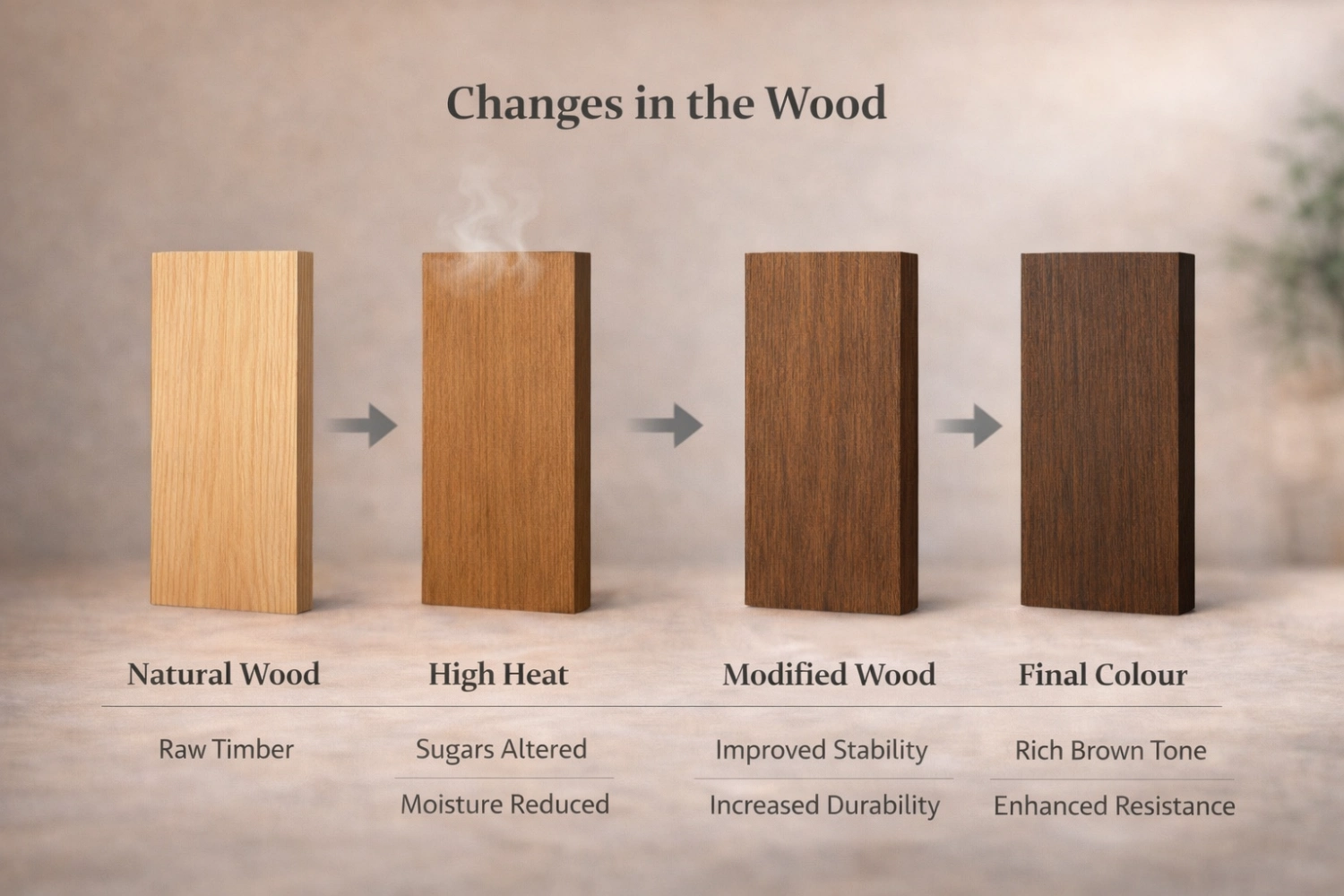
Thermal modification changes the internal structure of the timber rather than applying a surface coating or chemical preservative.
As the timber is heated, the wood darkens through the full section and becomes less able to absorb moisture from the surrounding environment. The result is a more dimensionally stable material with improved resistance to fungal decay in exterior conditions.
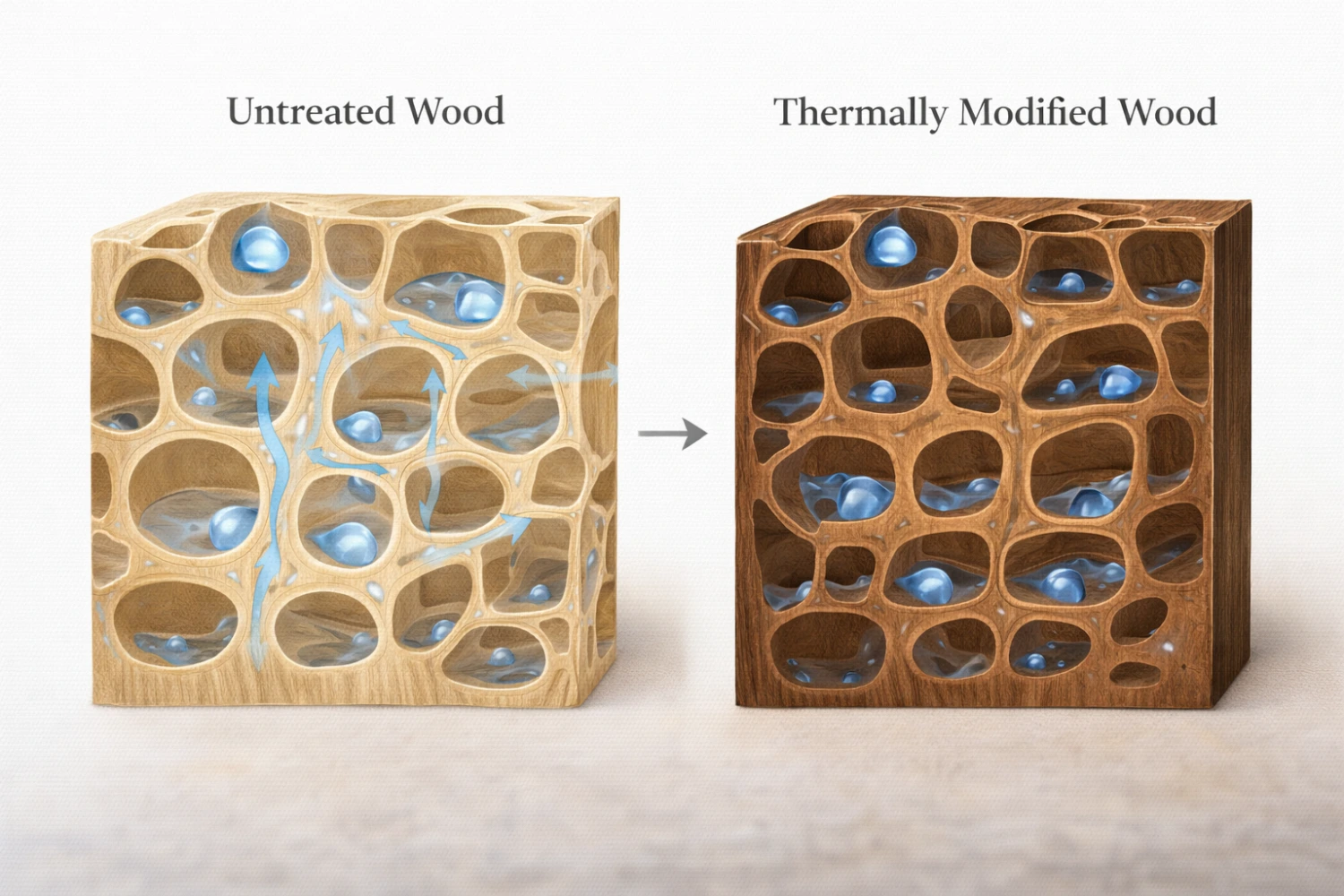
Untreated vs Thermally Modified Wood
Untreated timber naturally absorbs and releases moisture as environmental conditions change, leading to greater movement over time.
Thermally modified timber absorbs less moisture, resulting in improved dimensional stability and more predictable exterior performance.
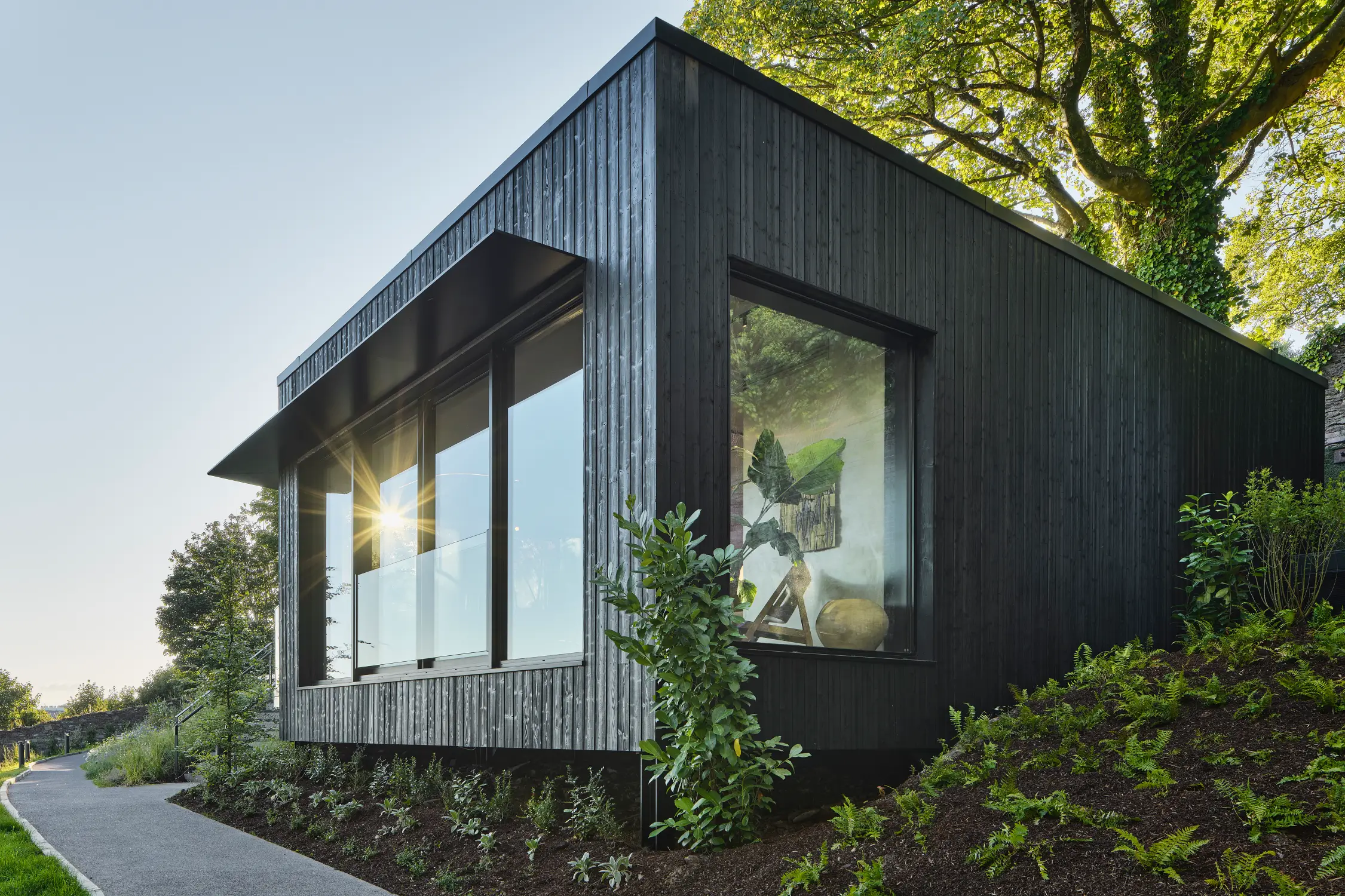
Typical Applications
Thermally modified timber is widely used where natural timber appearance is required alongside improved exterior stability.
At Corell, thermally modified timber forms the basis of the Avara® cladding range used across façades, screening and exterior timber applications.
Timber cladding
Screening and fencing
Outdoor structures
Landscape elements
Architectural timber features
Material Integrity
Thermally modified timber remains a solid natural material. The process uses only heat and steam to improve durability and dimensional stability without chemical preservatives.
Unlike composite products, timber remains repairable, recyclable and biodegradable at end of life while still retaining the benefits of thermal modification.
Subscribe to our Newsletter
Sign up to our newsletter to receive the latest news and updates to your inbox.

© 2026 Corell Architectural Timber Ltd.
All rights reserved.