How to Maintain Timber Cladding: The Proven Framework for a Façade That Lasts
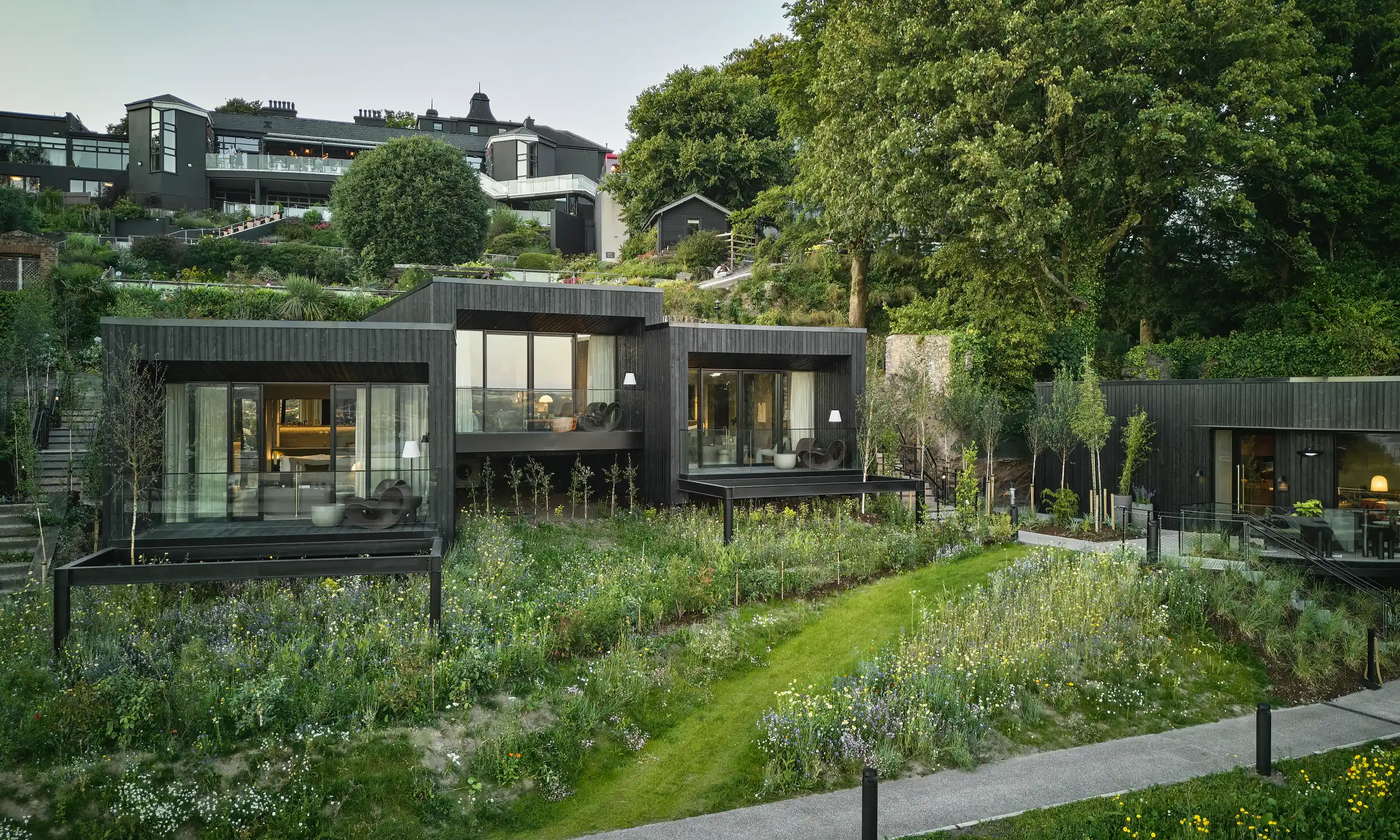
Timber cladding is designed to change over time. Sunlight, rain, wind and air gradually affect the colour and surface of the boards. Good maintenance does not mean constant intervention. It means inspecting the façade, keeping water moving away from the building and maintaining the finish where a particular appearance is required.
This approach applies to exterior timber cladding generally, including Avara® thermally modified timber. Avara® is thermally modified using a controlled heat and steam process. Corell carries out the machining, texturing and finishing in-house in Ireland, providing control over the finished architectural timber system.
Maintenance Begins With Inspection
The most effective maintenance routine is a planned inspection rather than frequent repair work. A formal inspection should be completed at least once a year, with additional checks after periods of severe wind-driven rain, impact or building work.
South- and west-facing elevations usually receive greater exposure. Particular attention should also be given to low-level areas, corners, window reveals, roof junctions and sections close to vegetation.
Check for:
- Open or uneven joints.
- Loose, corroded or failed fixings.
- Split boards, impact damage or excessive surface checking.
- Cupping, distortion or movement.
- Coating wear or localised colour change.
- Algae, mould, staining or trapped leaves.
- Water running directly onto the timber.
- Damaged flashings, gutters or downpipes.
- Blocked cavity openings.
- Soft timber or signs of persistent damp.
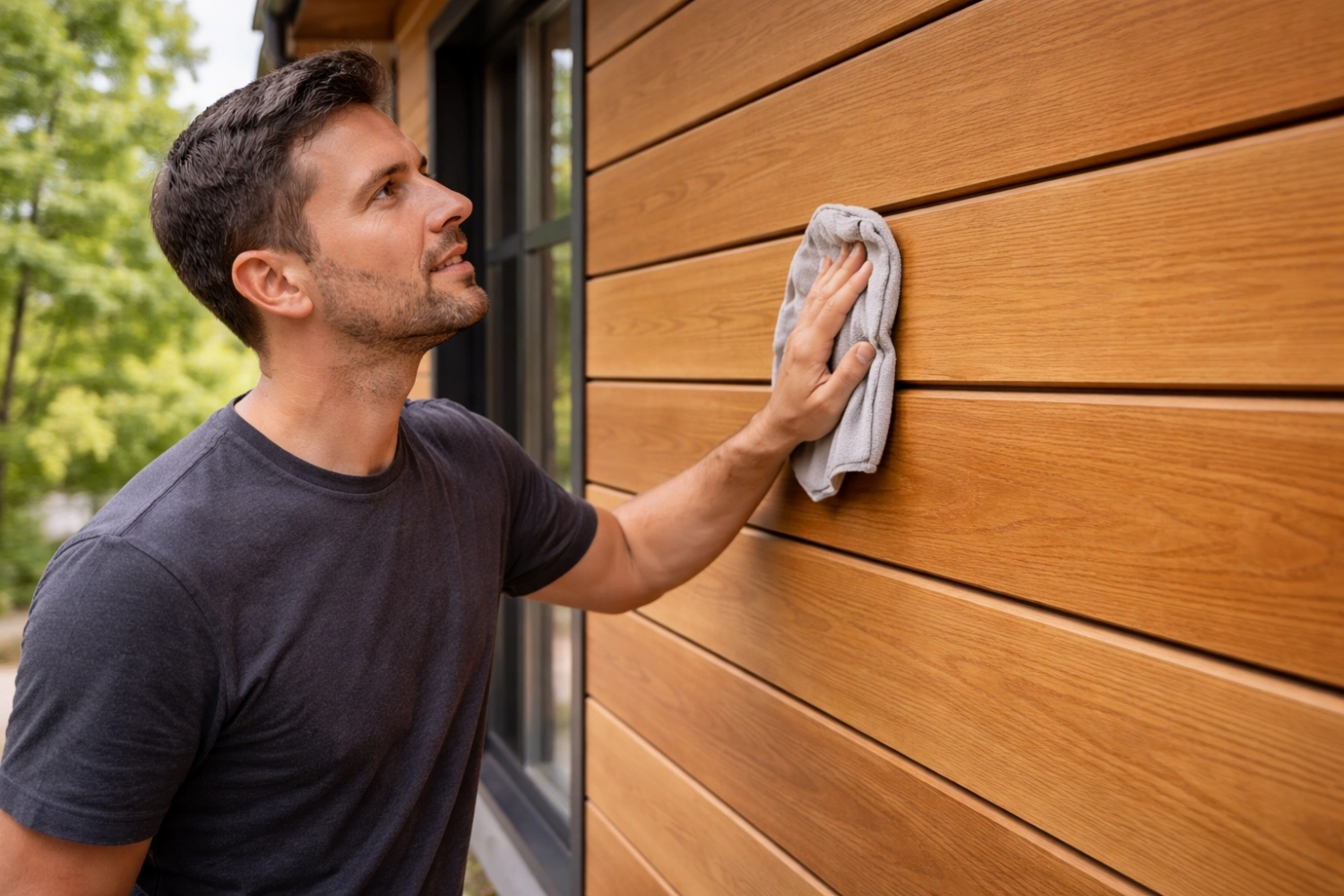
Joints, fixings and board ends deserve close attention because they are common points for water entry. A change in the coating surface may also indicate a problem behind the cladding, such as restricted drainage or moisture entering through a junction. The cause should be corrected before the surface is recoated.
A simple record of inspections is useful for commercial buildings and larger residential projects. Record the date, elevation, visible condition, photographs and any work completed. This creates a clear maintenance history and makes future inspections more consistent.
Coated And Naturally Weathered Timber
The maintenance approach depends largely on the chosen finish and the intended appearance.
Uncoated timber cladding will gradually weather to a silver-grey tone. The change is caused by exposure to ultraviolet light and moisture. The colour may develop at different rates across elevations, depending on orientation, shelter and local weather conditions.
Naturally weathered timber does not need to be recoated simply because its colour has changed. The silver-grey appearance is a normal part of exterior timber performance. Maintenance still includes cleaning, inspection, drainage checks and the repair of damaged boards or details.
Coated boards retain more of their original colour for longer. They require periodic cleaning and reapplication when the coating begins to lose protection or visual consistency. Exposure, elevation, colour, texture and coating type all influence the interval.
A translucent pigmented finish generally provides greater resistance to ultraviolet bleaching than a clear finish. Clear oils and similar low-build systems may require more frequent attention in exposed Irish conditions. The coating manufacturer's instructions should always determine the preparation method and recoat interval.
The Avara® finishes range includes smooth, brushed, Rift and Yakisugi textures. Each surface interacts differently with light, moisture and coatings. The selected texture should therefore be considered alongside the intended maintenance strategy.
Cleaning Without Damaging The Surface
Cleaning removes surface dirt, organic growth, salt deposits and airborne pollutants before they become more difficult to manage. It also makes it easier to identify areas that need attention or damaged timber.
Use clean water or a mild detergent suitable for exterior timber. Apply it with a soft, non-metallic brush and work along the direction of the grain. Test the cleaning solution on a concealed section before treating the full elevation.
Avoid high-pressure washing. A strong jet can damage the timber surface, raise the grain and force water behind the cladding. It can also create an uneven appearance by removing or disturbing parts of the coating.
Rinse gently and allow the boards to dry fully before assessing their condition. Do not apply a new finish to damp timber. The surface must be clean and dry.
Gutters, downpipes and flashings should be checked at the same time. Timber cladding is more likely to require repair where rainwater is discharged repeatedly onto one section of the façade.
Ventilation, Drainage And Airflow
The cavity behind the cladding is part of the maintenance system. A ventilated cavity allows water to drain and air to move behind the boards. This helps the outer face and rear face of the timber remain closer in moisture content, reducing the likelihood of distortion.
Airflow must remain open at the top and bottom of the cavity. Insect mesh, flashings and drainage openings should be intact and free from debris. The cavity should not be blocked with insulation, sealant, leaves or construction waste.
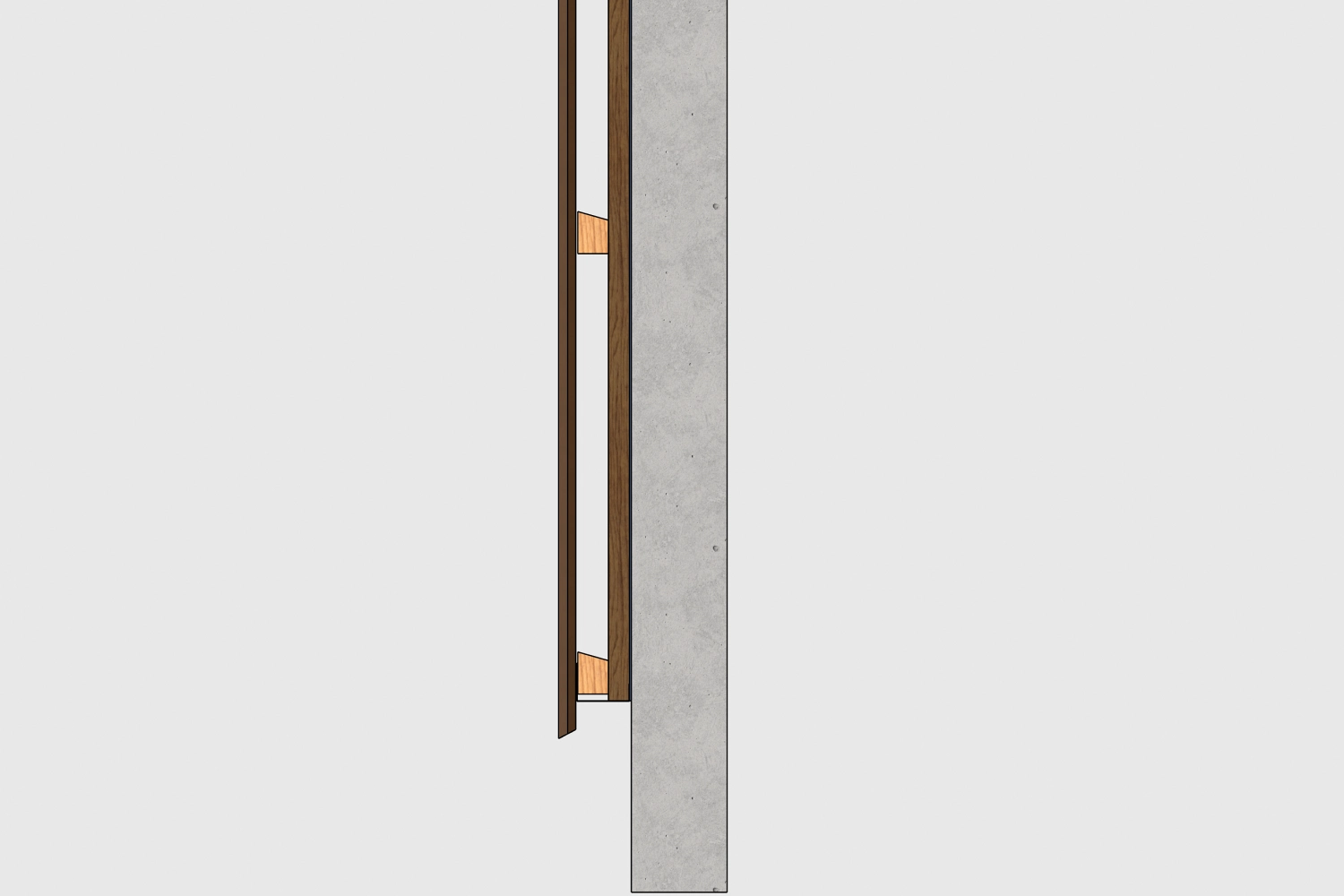
The timber cladding detailing guidance sets out the principles behind a durable rainscreen installation. These include correct batten support, continuous airflow, drainage at the base of the wall and allowance for natural timber movement.
Maintenance cannot compensate for poor initial detailing. A blocked cavity, missing flashing or badly designed junction can create persistent moisture regardless of the timber species or coating selected.
End Grain And Cut Edges
End grain absorbs moisture more readily than the long grain on the face of a board. Cut ends, mitres, notches and drilled penetrations must therefore be handled carefully during installation and repair.
Where a coating system is specified, freshly cut edges should be sealed with a compatible end-grain treatment before the board is fixed. Board ends should not sit directly on wet or porous surfaces. Flashings and open drainage gaps should allow water to leave the detail rather than remain against the timber.
Joints around windows, doors, corners and trims should be inspected for open gaps or failed sealant. Sealant should not be used to block the drainage cavity or prevent necessary airflow.
The timber cladding installation guidance should be followed for the selected profile, fixing method and project-specific detail.
Recoating And Restoring The Surface
Recoating should begin when the finish shows signs of weathering or reduced visual consistency. For Avara® coated cladding, the maintenance coat is applied to keep the surface clean, consistent and protected. The coating is designed to remain intact rather than fail by peeling, blistering or flaking.
Preparation normally includes:
- Washing away dirt and surface growth.
- Allowing the timber to dry completely.
- Repairing the source of any water entry.
- Treating damaged end grain and cut edges where required.
- Applying a compatible exterior maintenance coat in accordance with the manufacturer's instructions.
Do not apply a new coating without understanding the existing system. Oil, varnish, opaque paint and microporous stains have different preparation and compatibility requirements.
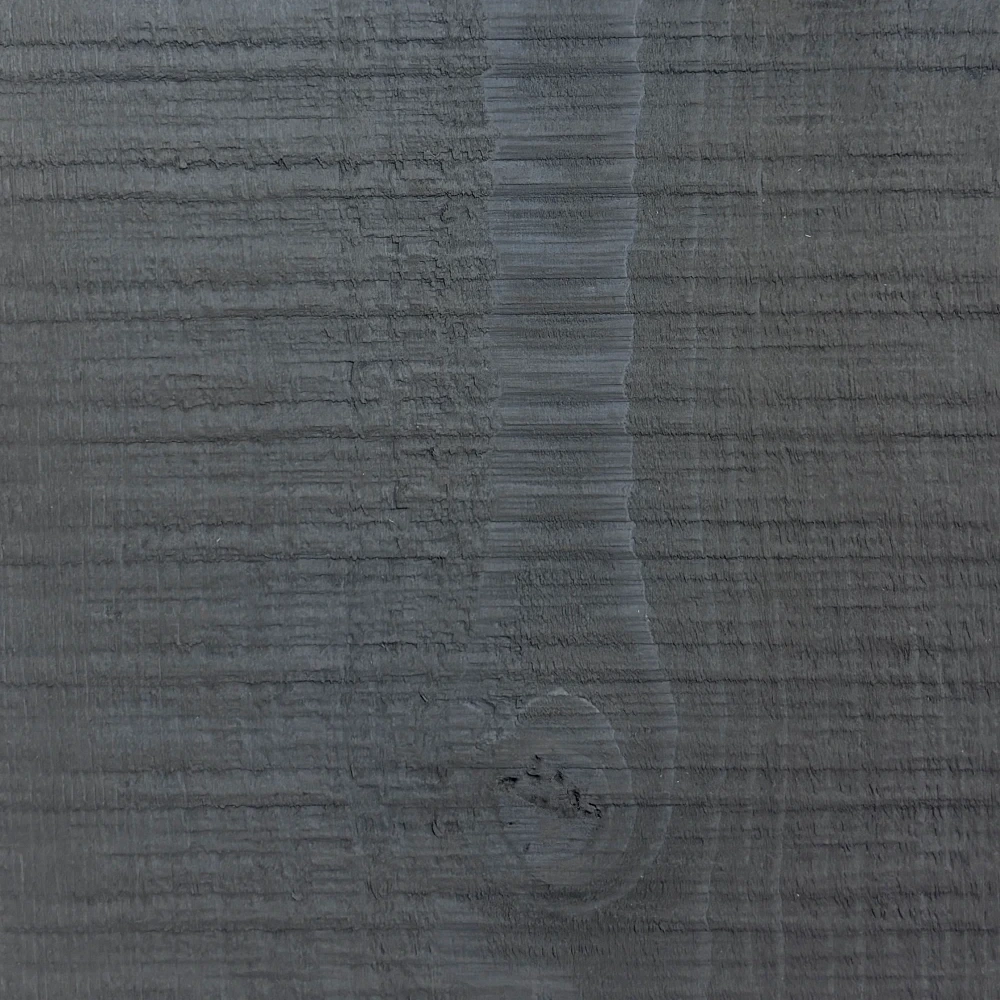
One of the practical advantages of natural timber is its renewability in use. Boards can be cleaned, recoated and repaired. This allows the façade to be refreshed without automatically removing and replacing the full system.
This differs from composite cladding, where repetitive surface patterns and limited board-to-board variation can become more apparent over time. Composite materials generally provide less natural depth and tactile variation than real wood. Timber retains individual grain, texture and character, and its appearance can be restored rather than treated as fixed once the surface has aged.
Replace Individual Boards Where Required
A damaged board does not normally mean that the entire façade needs replacement. Individual boards can often be removed and replaced when the profile, finish, orientation and fixing method are properly matched.
Replacement is appropriate where a board is split, badly distorted, impact-damaged, persistently damp or showing decay. Coating over soft or damaged timber only conceals the problem and may allow moisture to remain within the system.
New boards may initially differ in colour from the surrounding façade. A coated board can usually be finished to align with the existing system. Naturally weathered timber will gradually develop its own tone, although some variation should be expected during the transition.
For this reason, spare boards should be retained where possible. A small quantity from the original batch can simplify future repairs and help maintain consistency across the elevation.
A Practical Maintenance Schedule
A simple schedule keeps the work proportionate.
Seasonally: Check gutters, downpipes, vegetation and visible areas where water may discharge onto the cladding.
Annually: Wash the façade as required. Inspect joints, fixings, board ends, openings, flashings, cavity openings and coatings. Record photographs and any defects.
After severe weather or building work: Check for impact damage, loose boards, displaced flashings and open joints.
When the coating shows wear: Clean and recoat the affected area using a compatible system. Localised work may be suitable where exposure or damage is limited.
When a board is damaged: Investigate the cause, repair the surrounding detail and replace the individual board where necessary.
For larger or taller buildings, access and inspection should be considered at design stage. A maintenance strategy is part of the façade design, alongside material selection, fixing, drainage and fire performance.
Long-Term Care For Architectural Timber
Well-maintained wood cladding does not need to look permanently new. It can retain a controlled coated appearance, or it can develop a natural silver-grey patina. Both approaches are valid when the detailing, drainage and inspection routine are appropriate.
Avara® thermally modified timber combines dimensional stability with the grain and character of real wood. With controlled detailing, suitable cleaning and timely local repairs, exterior timber cladding can remain a durable and adaptable part of the building envelope.
Review the maintenance requirements for your timber cladding project.

© 2026 Corell Architectural Timber Ltd.
All rights reserved.