Thermally Modified Timber vs Pressure-Treated: Which Should You Specify?
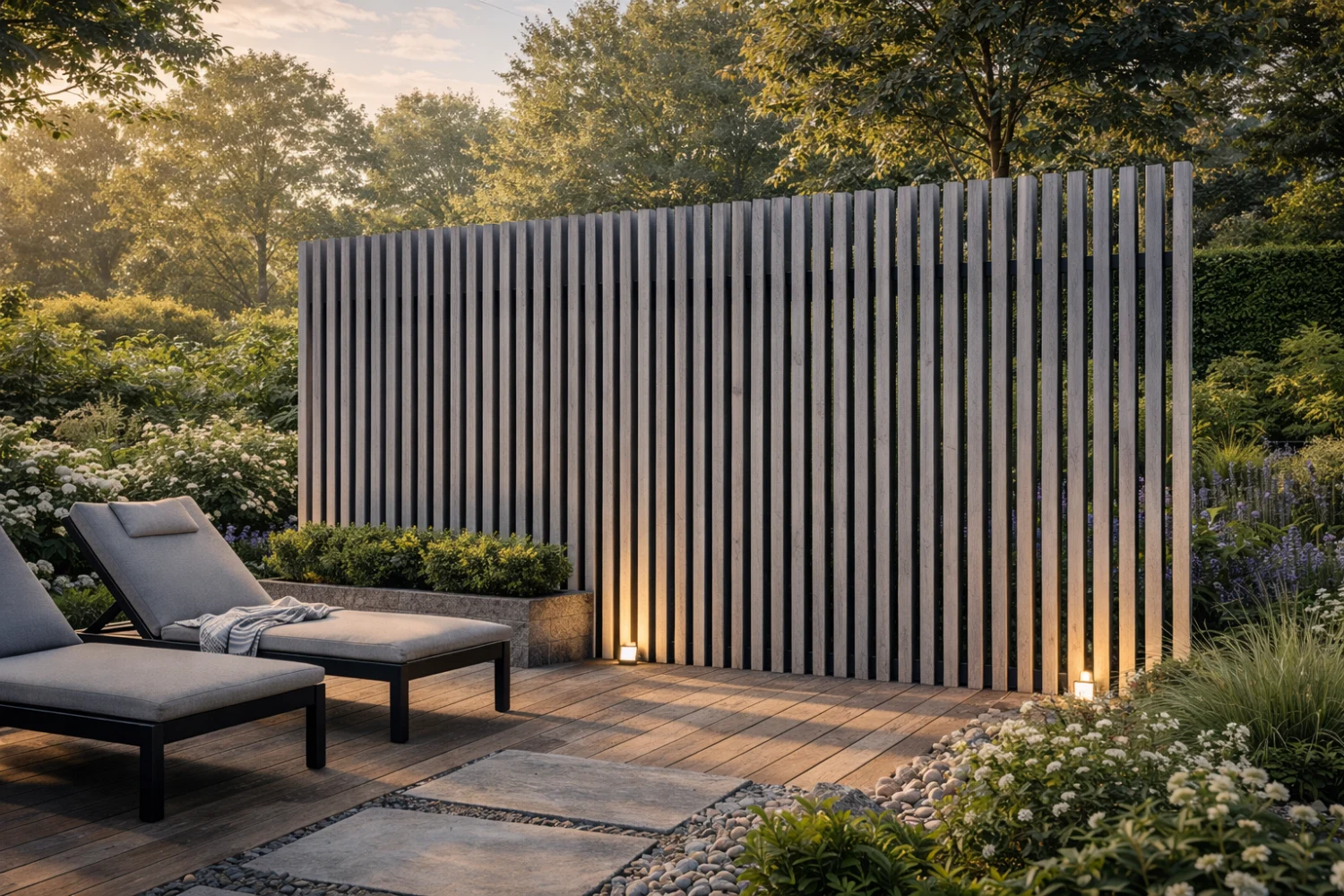
Three timber routes are usually considered for exterior work: Avara®, pressure-treated softwood and unmodified softwood. They are not equals in exposed conditions, and the difference shows up over time in movement, appearance and how the detailing holds together.
For visible wood cladding, screening and decking, the distinction is not simply how the timber is treated. It is how the material behaves after treatment, how much the finished result depends on site work being perfect, and how consistently it performs when it is not.
Three Different Starting Points
Unmodified softwood is timber in its natural state, without preservative treatment or thermal modification. It is economical and easy to work, but it has no meaningful protection against fungal decay in external conditions. It absorbs and releases moisture readily, so it shrinks, swells, cups, splits and checks. Left exposed, it will deteriorate, and it should not be relied on for unprotected exterior use. Where it appears outside at all, it is in sheltered, temporary or well-protected situations.
Pressure-treated softwood has been impregnated with chemical preservatives under pressure. The treatment is intended to improve resistance to fungal decay and insect attack. It is a well-established route for structural timber, ground-adjacent work, heavy-use applications and decking where decay resistance is the primary requirement.
The Avara® system is built on thermally modified timber. The timber is altered through a controlled heat and steam process that changes its relationship with moisture through the full section, reducing moisture uptake and improving dimensional stability without chemical preservatives. That base material is then machined, textured and finished in-house in Ireland through to the final coating, so the system is the product rather than the modification alone.
These routes therefore start from very different positions. Unmodified softwood has no protective treatment at all, so its exterior performance depends entirely on shelter and detailing and it cannot be depended on in exposed work. Pressure treatment protects part of the timber against biological attack. The Avara® system changes how the timber responds to moisture and movement through the full section, and then controls the finished surface, so performance does not hinge on a treatment layer staying intact.
How The Avara® System Works
Avara® is a complete exterior timber system rather than a single material. It begins with thermally modified timber and finishes as a specified board, machined, textured and coated for its intended application.
The modification extends through the full timber section rather than remaining only at the surface. Machining, cutting or texturing therefore does not remove a shallow treatment layer in the way that a surface-applied protection can be affected by later work.
Avara® does not rely on chemical preservatives as part of the modification process. It retains the grain, texture and workability associated with softwood while offering more predictable behaviour in exterior conditions.
Corell does not carry out the modification itself. That takes place before the timber reaches Corell. What Corell controls is everything after it: the profile, the surface texture and the final coating, all machined and finished in-house in Ireland. That control from raw timber through to the finished board is what makes Avara® a system rather than a commodity.
Learn more about the Avara® process.
How Pressure Treatment Works
Pressure treatment introduces chemical preservative into the timber under controlled pressure. The objective is to protect the wood against fungal decay and insect attack, particularly where the timber may remain damp or be exposed to demanding conditions.
Pressure-treated softwood is generally used for structural applications, ground-contact elements, supporting components and decking. It is also a valid option for exterior cladding where the treatment specification, exposure class and detailing are appropriate.
The treatment does not remove the timber's natural response to moisture. The underlying softwood can still shrink, swell, cup, split or check as environmental conditions change. Pressure treatment protects against decay, but it does not change the timber's moisture movement in the way the Avara® system does.
Appearance can also vary. Pressure-treated timber may show a green or brown treatment tint, depending on the preservative system and the condition of the timber. This is not a fault. It is a visible characteristic of the treatment route.
Pressure treatment does not penetrate the full section of the timber. The preservative reaches only part of the way in, so the core of a treated board remains unprotected. The board performs because a treated envelope surrounds an untreated centre.
That envelope is easily broken on site. Every cut creates a new end with no preservative protection, and that end becomes the first point where decay can begin if it is not re-treated properly. The same applies to mitres, notches, drilled penetrations and screw holes. Fixings driven too deep, or punched through the surface, expose untreated wood in exactly the place where water collects and dries slowest.
This is why pressure-treated decking is so often seen failing after only a short period in service. Cut ends were not re-treated, fixings were over-driven, and joints held water. The protection was never continuous to begin with. This is a limitation of how impregnation works, not a criticism of the product itself.
Ground contact is the hardest case of all. In soil, timber stays persistently damp with little opportunity to dry, and decay fungi have continuous access to moisture. Pressure-treated timber is widely used in and near the ground, but it is not a permanent solution there. The treated envelope is still only part of the section, and every cut, notch or fixing point in ground-contact work is a place where untreated wood can be reached by water.
The same caution applies above ground. Pressure-treated timber gives a dependable result only where detailing, ventilation and fixings are all done correctly: boards kept clear of standing water, ends and cut faces properly protected, fixings correctly driven and not over-driven, and adequate airflow maintained. Where any of that is compromised, performance falls away quickly. That is a lot of site discipline to rely on for a visible façade or a deck that has to look right for years.
Dimensional Stability And Movement
Movement is the key practical difference between the routes, and it is where the gap is widest.
Unmodified softwood absorbs and releases moisture readily. This can result in visible changes to board width and shape. On a façade, movement can affect joint lines, board spacing, alignment and the appearance of openings and corners.
Pressure-treated timber has the same underlying movement because the treatment is designed primarily to resist decay rather than change the wood's moisture response.
Avara® takes up less moisture and moves less. This supports more stable open joints, more consistent board spacing and a crisper façade over time. It also provides a more predictable base for coatings and textured finishes.
Durability, Decay Resistance And Detailing
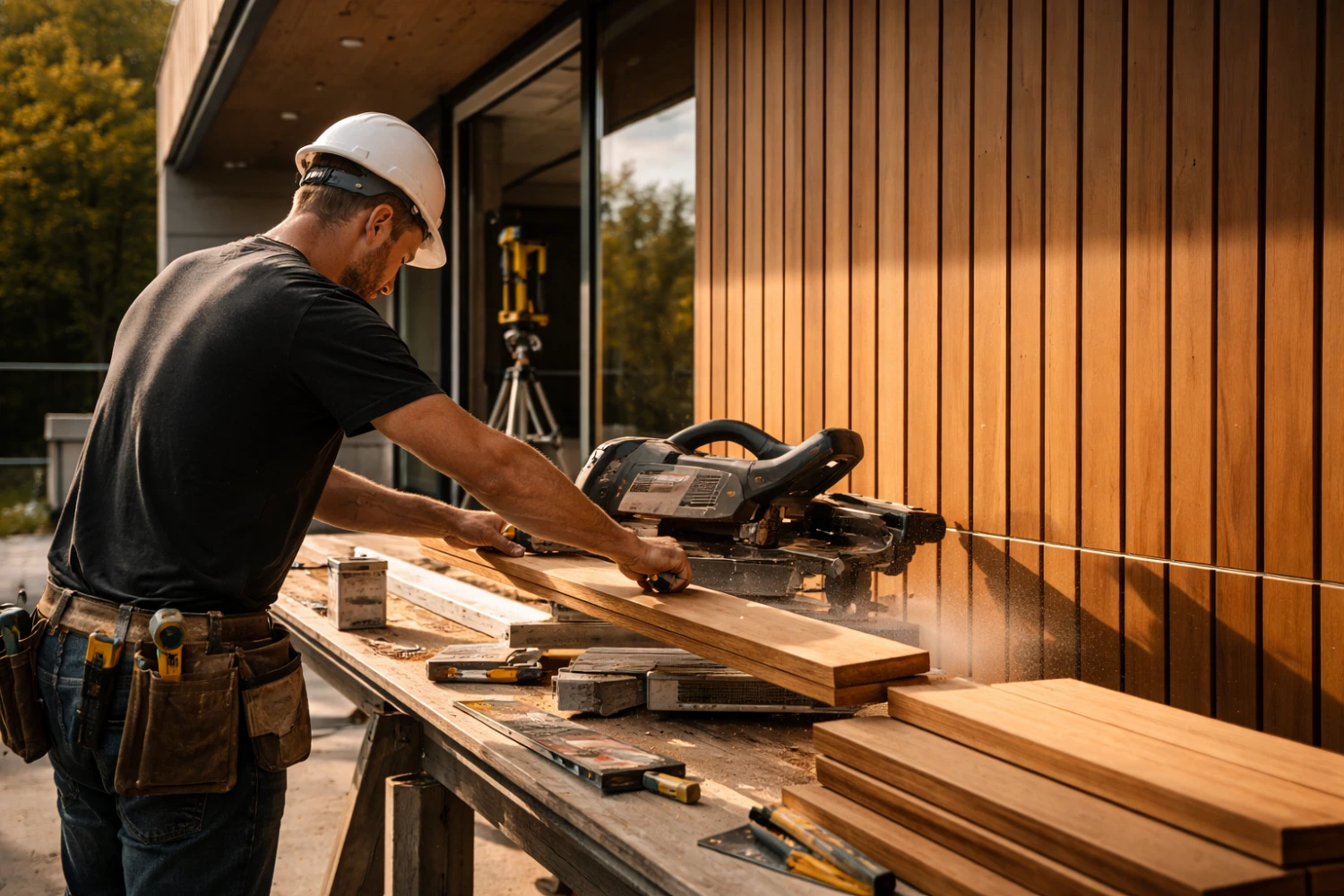
All exterior timber requires suitable detailing. Ventilation, drainage, end-grain protection, fixing and separation from standing water remain important regardless of the material selected.
Unmodified softwood has no preservative protection and will deteriorate in exterior conditions, so it is not a serious option for exposed work. Pressure-treated softwood adds preservative protection and suits structural and ground-adjacent applications, but it depends on the treated envelope remaining intact and on site detailing being right. The Avara® system combines full-section modification with a controlled, in-house finished surface, so it offers consistent performance in exposed applications without relying on a treatment layer to stay whole.
No treatment compensates for a façade that cannot drain or dry. A ventilated cavity, correct batten arrangement and open airflow at the top and bottom of the cladding support long-term performance.
The contrast with the Avara® system is straightforward. Because the modification is applied through the full section of the timber rather than as a preservative introduced part way in, there is no untreated core and no treated envelope to break. Cutting, machining and drilling do not open the material up to decay in the same way.
Correct detailing, ventilation and end-grain protection still matter for every material. The Avara® system does not depend on a treatment layer remaining intact to perform.
For high-exposure façades, vertical cladding is the performance-led choice because water drains down the face of the board. Horizontal cladding remains fully valid when the profile, cavity, drainage and junctions are detailed correctly. Horizontal boards fix to vertical battens to maintain the required airflow and support.
Diagonal cladding is a less common option. It can be used for a specific design intent, but it usually requires more detailed coordination at corners, openings and drainage points.
Avara® is supported by a 15-year limited warranty against fungal decay when correctly detailed, installed and maintained. The warranty does not remove the need for project-specific design and installation guidance.
Review timber cladding detailing principles.
Appearance, Workability And Finishing
Unmodified softwood is generally the palest and least stable of the three options. Pressure-treated timber can have a green or brown tint and may show greater variation between boards.
The Avara® system develops a richer, more even colour while retaining natural grain and board-to-board variation. It machines, textures and finishes well. This makes it suitable for architectural timber applications where the surface is part of the design.
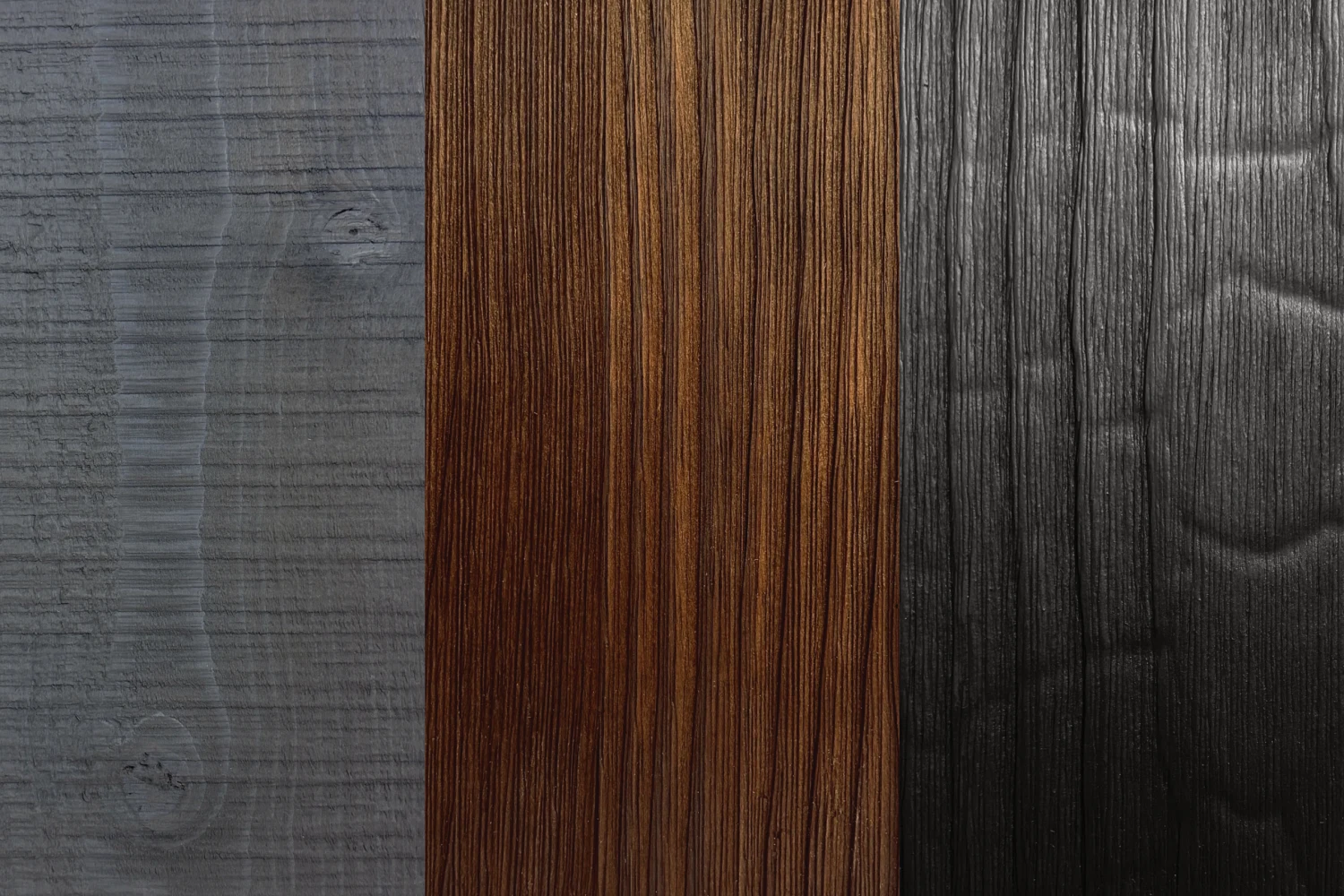
Avara® is available in four textures: Smooth, Barnwood, Rift and Yakisugi. Smooth provides a clean planed surface. Barnwood opens the grain for a more tactile appearance. Rift introduces a linear saw-cut texture. Yakisugi creates a charred, architectural surface with pronounced depth and variation.
A properly applied coating does not peel, blister or flake, so sanding is never required as part of maintenance. Maintenance consists of inspection, cleaning and reapplication in accordance with the selected coating system.
Explore timber cladding finishes.
Where Each Material Suits
Unmodified softwood: not recommended for unprotected exterior use. It has no decay protection and moves significantly with moisture. Its place is sheltered, temporary or protected work where it can dry out and where appearance over time is not a priority.
Pressure-treated softwood: suitable for structural applications and ground-adjacent work, and a practical option for decking and heavy-use areas where preservative protection and cost are the main considerations. It remains a valid trade product, but it carries real limits. It is not permanent in ground contact, and its above-ground performance depends on cut ends being re-treated, fixings being correctly driven and the detailing being right.
The Avara® system: the recommended specification for visible exterior cladding, screening and decking. It offers dimensional stability, a controlled finish and consistent performance in exposed conditions, without depending on a treatment envelope staying intact. Where appearance and longevity matter, it is the route that delivers both.
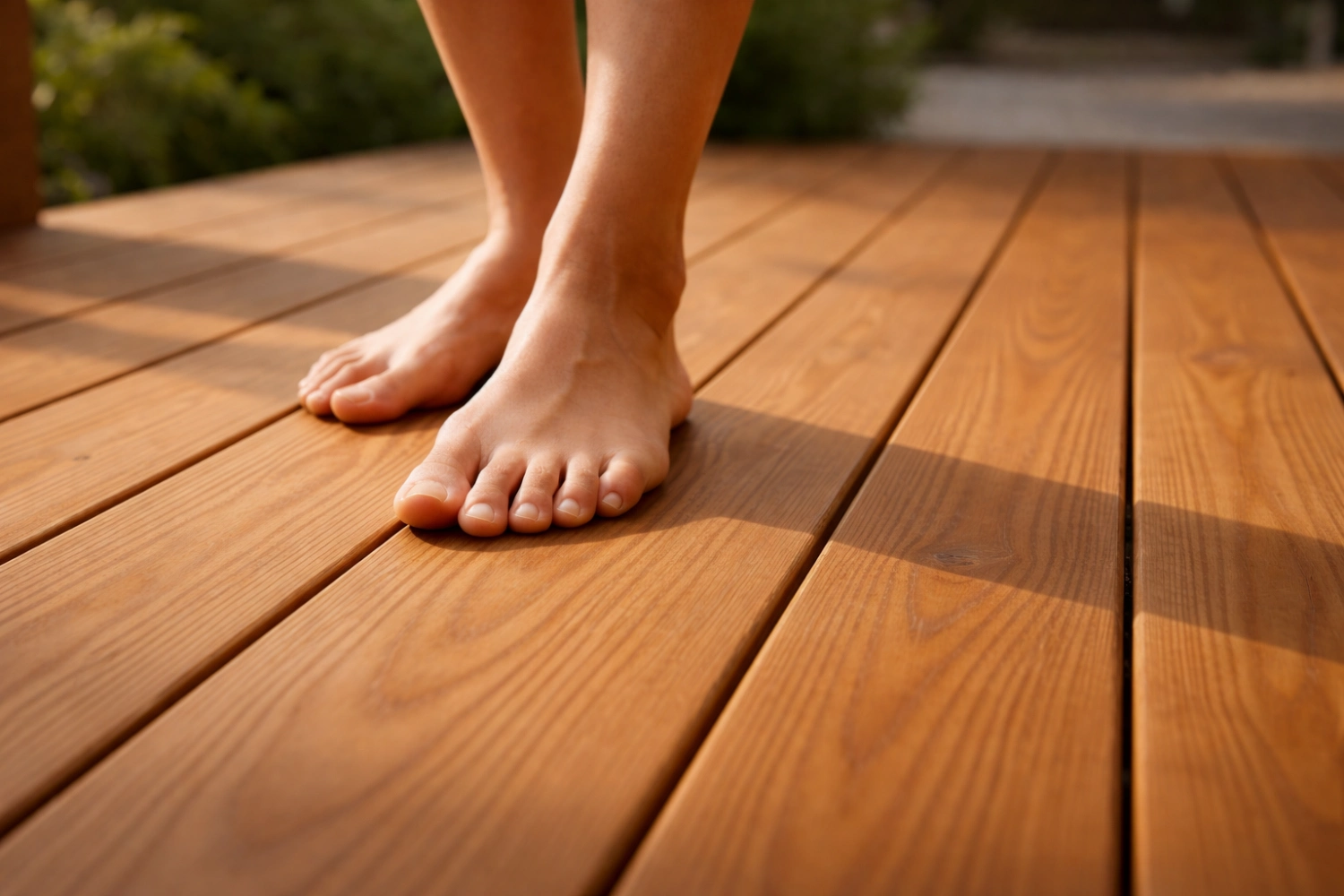
For decking, the selected board, fixing system, support arrangement and ventilation must be specified for the intended use. The Avara® system offers a stable and natural surface, while pressure-treated timber remains a well-established option where decay resistance and cost are the main drivers.
Summary Comparison
| Material | Primary Characteristic | Typical Exterior Uses |
|---|---|---|
| Unmodified softwood | No decay protection in exterior conditions, with significant moisture movement | Not recommended for unprotected exterior use; sheltered, temporary or protected work only |
| Pressure-treated softwood | Preservative protection that penetrates only part of the section | Structural and ground-adjacent work, heavy-use areas and decking, where detailing and fixings are carefully controlled |
| The Avara® system | Full-section modification with in-house machining, texturing and finishing in Ireland | Avara® façades, screening, decking and exposed architectural applications |
Unmodified softwood has no real place in unprotected exterior work. Pressure-treated timber remains a valid and established trade product for structural and ground-adjacent applications, but it asks a great deal of the detailing and the fixings, and it is not a permanent answer in the ground.
For visible exterior timber, the Avara® system is the clear specification. It combines full-section modification with in-house machining, texturing and finishing in Ireland, from the initial profile through to the completed surface. That is what makes it a system rather than a material, and it is what lets the finished façade perform and keep its appearance without depending on a treatment layer surviving every cut and fixing.

© 2026 Corell Architectural Timber Ltd.
All rights reserved.