Timber Cladding vs Composite: Which Is Better for Your Façade?
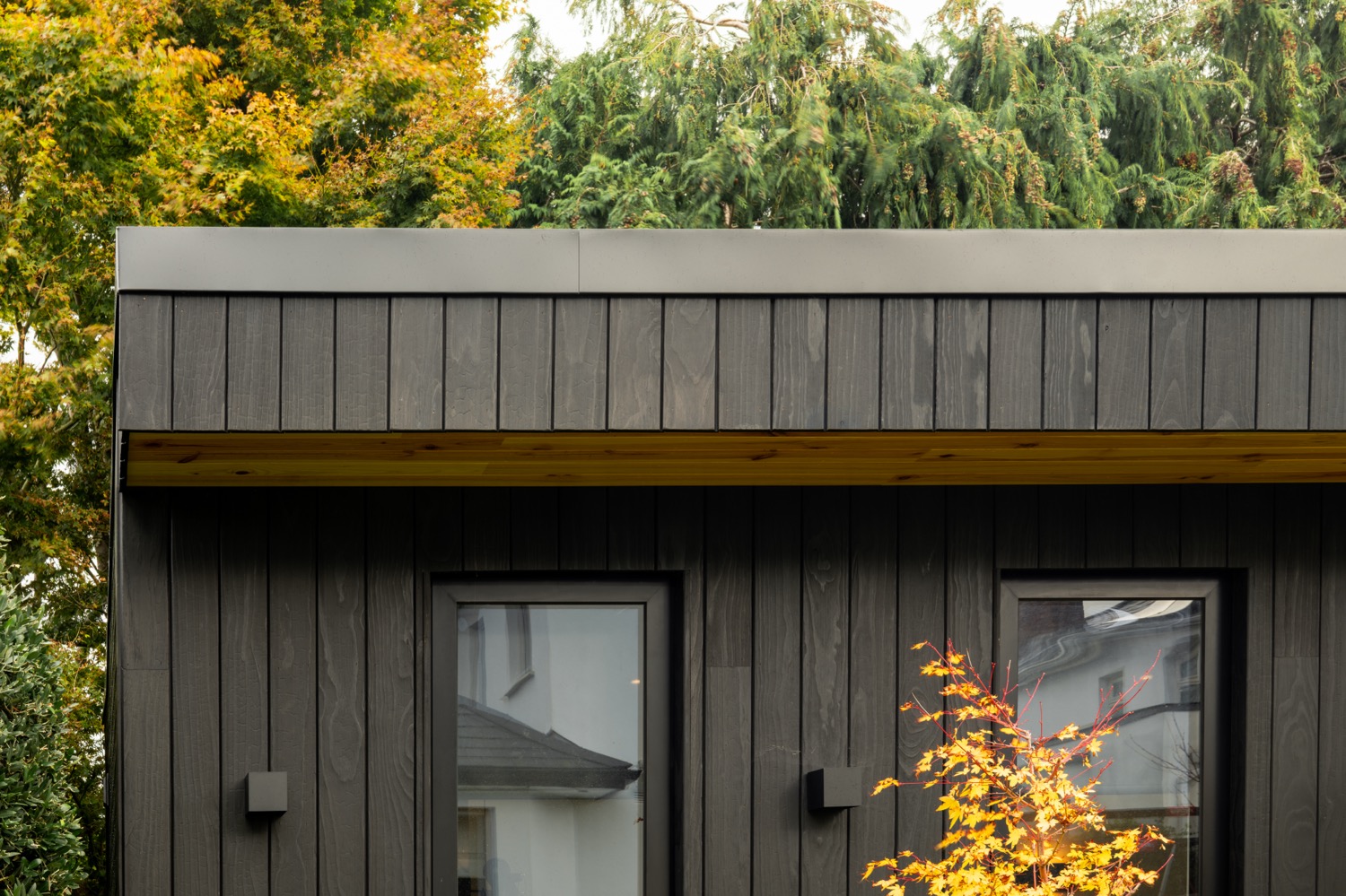
Choosing a façade material involves more than appearance and initial cost. It must perform through wind, rain, changing temperatures and regular moisture exposure.
Timber cladding and composite cladding serve different architectural priorities. Timber offers authentic grain, repairability and natural weathering. Composite is typically selected for reduced routine maintenance and a more consistent manufactured finish.
For projects in Ireland, the right choice depends on exposure, detailing, finish, maintenance strategy and long-term material priorities.
Timber Cladding And Composite Cladding
Timber cladding is a solid wood product machined into boards or profiles for use on an external wall. Its appearance comes from the natural structure of the wood. Grain, knots, texture and colour variation remain visible across the façade.
Composite cladding generally combines wood fibres with polymers, resins or other materials. The formulation varies between products. In most cases, it is designed to reduce moisture absorption, limit surface maintenance and provide a consistent manufactured finish.
Neither option removes the need for correct façade design. Both systems require suitable substructure, fixings, drainage and allowance for movement.
The distinction is material character. Timber remains natural, workable and repairable. Composite is an engineered board with a bonded factory surface.
Performance In The Irish Climate
Irish façades are exposed to persistent rainfall, wind-driven moisture and regular changes in humidity. West-facing and coastal elevations typically face greater exposure than sheltered façades.
Untreated softwood can absorb and release moisture as conditions change. This can result in movement, cupping, splitting or open joints where material selection, detailing or maintenance is poor.
Thermally modified timber performs differently. The controlled use of heat and steam reduces moisture absorption. This improves dimensional stability and gives the material more consistent behaviour in exterior conditions.
Avara® is produced from thermally modified Radiata Pine and Finnish Spruce. The modification changes the timber through its full cross-section rather than applying a surface treatment. The result is a stable solid wood material designed for façades, screening and other exterior applications.
Composite cladding’s moisture advantage applies mainly when it is compared with untreated softwood. That advantage is narrower when the comparison is made against thermally modified timber, as Avara® achieves comparable moisture resistance through thermal modification rather than through a polymer-based factory surface.
This distinction matters over time. Avara® remains solid, repairable wood. Composite depends on a bonded manufactured surface that cannot be renewed once it has faded, chalked or broken down.
Composite also moves with temperature. Installation must allow for thermal expansion, joint spacing, fixing arrangements and the supporting system.
In both cases, performance begins with the wall build-up. A ventilated cavity, open drainage path and suitable flashing details are essential.
How Thermal Modification Changes Timber
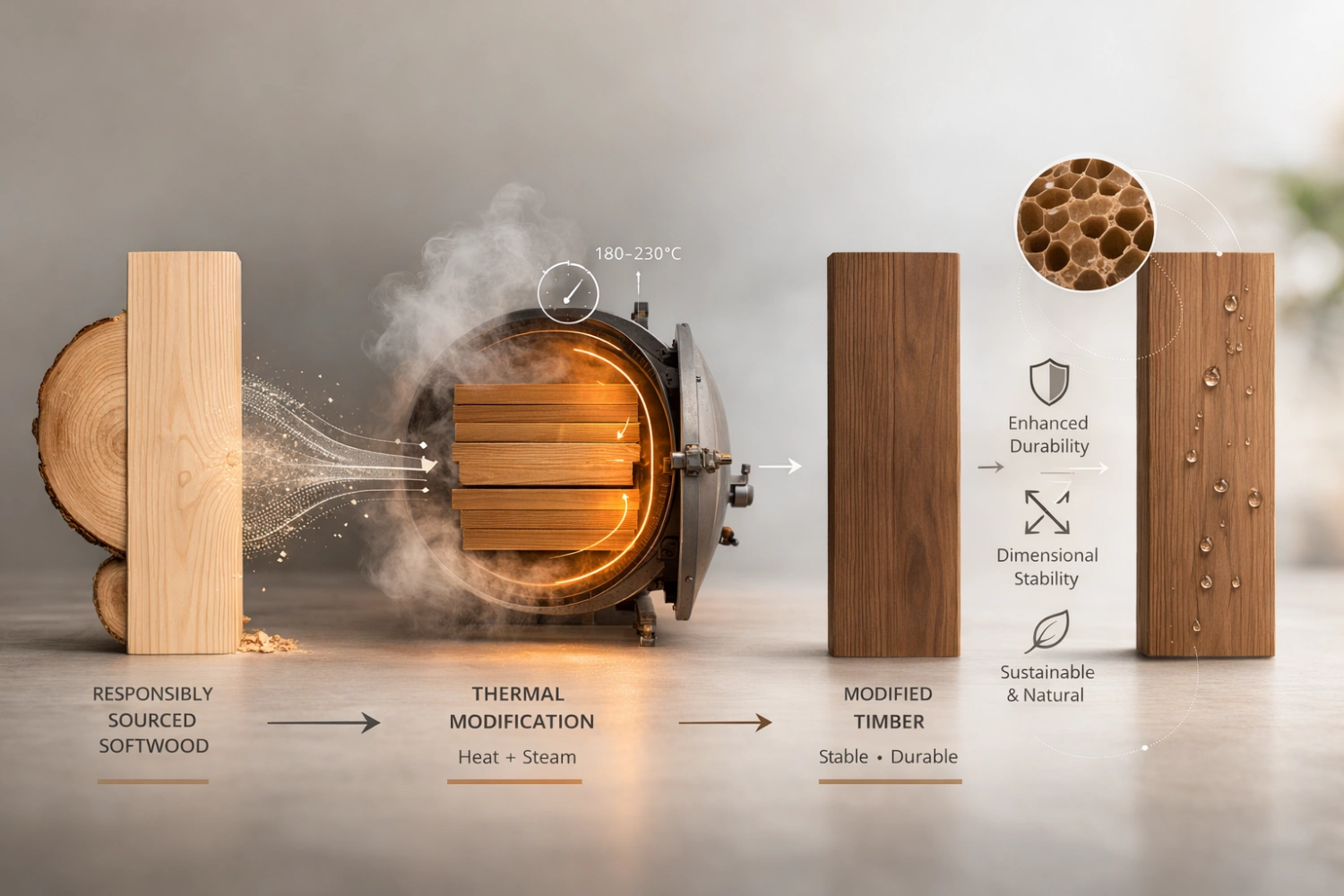
Thermal modification uses heat and steam in a controlled, low-oxygen environment. The process typically uses temperatures between 212°C and 230°C.
This reduces the timber’s ability to absorb moisture from the surrounding environment. It also improves resistance to moisture-related movement and fungal decay.
The process does not rely on chemical preservatives. The timber remains a solid natural material, with the grain and tactile qualities associated with real wood.
This is the basis of thermally modified timber and Avara® architectural cladding. It allows a softwood material to provide a durable exterior solution while retaining the workability of timber during machining and installation.
Corell does not carry out the thermal modification process in-house. Machining, texturing and finishing are carried out in-house in Ireland, giving control from raw timber through to final coating.
All timber still moves to some degree. Thermal modification does not remove the need for correct detailing. It reduces moisture movement and makes the material’s behaviour more consistent.
Durability And Dimensional Stability
Composite cladding is often specified for moisture resistance and reduced routine maintenance. Long-term surface performance varies significantly between products. Lower-cost composite boards are widely reported to delaminate, chalk and lose colour over time, particularly in exposed locations and on elevations with strong UV exposure.
This matters because the factory surface is the finish. Once that outer layer has faded, chalked or started to break down, it cannot reasonably be restored to its original appearance. In practice, the affected boards usually remain visibly aged until they are replaced.
Higher-grade composite systems generally perform more consistently than budget products. Even so, they remain manufactured boards with a fixed surface finish rather than a material that can be renewed repeatedly through refinishing.
The performance of timber depends on species, treatment, profile, coating, exposure and detailing. Conventional untreated softwood may require more careful maintenance in exposed locations.
Avara® is designed to improve this balance. Thermal modification enhances exterior durability and dimensional stability without using chemical preservatives. The timber is then machined, textured and finished in-house in Ireland.
This in-house approach gives greater control over profile, surface treatment and coating. It allows material selection and finish to be considered together rather than treated as separate decisions.
Avara® is supported by a 15-year limited warranty against fungal decay when correctly detailed, installed and maintained. Project-specific requirements should always be reviewed with the supplier and design team.
Maintenance And Natural Weathering
Composite cladding is commonly marketed as a low-maintenance alternative. Routine care generally involves cleaning rather than painting, staining or oiling.
Reduced routine maintenance is not the same as renewability. Composite cannot be sanded back, re-oiled or re-coated to recover the original factory appearance. If the surface fades, chalks or deteriorates, that change is effectively permanent.
Cleaning may remove dirt. It does not restore the finish.
Timber requires a more considered maintenance strategy. It also offers a different long-term advantage. The level of maintenance depends on the selected finish and the intended appearance.
Untreated timber can be allowed to weather naturally. Over time, the surface changes tone and may develop a silver-grey appearance. This weathering is part of the character of real wood and should occur consistently across the façade.
Coated timber provides greater control over colour and appearance. Coatings may slow weathering or introduce a more defined architectural finish. They require periodic inspection and, depending on exposure, maintenance coats.
Real timber can be renewed. Boards can be sanded, re-coated or re-oiled and brought back to a fresh appearance again and again over their service life.
Avara® finishes include smooth, brushed Barnwood, Rift and Yakisugi textures. Each interacts differently with light, moisture and coating. Timber cladding finishes should therefore be selected alongside the project’s exposure and maintenance plan.
Low maintenance does not mean no maintenance. Composite surfaces still require cleaning. Timber façades benefit from regular inspection of coatings, joints, fixings and drainage paths.
Appearance And Material Character
Composite cladding can provide a uniform manufactured appearance across a façade. Some products are designed to imitate the colour and texture of timber, while others use a more contemporary linear or matt finish.
Even higher-grade composite systems remain imitations of wood rather than wood itself. The surface pattern is repeated. Grain does not vary naturally from board to board. There is less visual depth and less tactile quality.
Real timber has a different visual character. Grain varies from board to board. Knots and tonal change create a surface with depth. The material changes gradually through exposure rather than remaining visually static.
This matters where the façade is intended to feel connected to its setting. Timber can sit naturally alongside brick, stone, render, concrete and planted landscapes.
The Avara® cladding range is available in Clear and Character grades. Clear provides a more refined appearance with limited knots. Character retains visible knots and natural variation.
Profiles, textures and coatings can then be combined to establish the intended architectural language. From smooth coated boards through to textured or charred surfaces, the finish remains recognisably timber.
Repairability Over The Life Of The Façade
Timber offers a practical repairability advantage. Minor surface damage can often be sanded, refinished or locally treated. Individual boards can also be removed and replaced where required.
The repair may not be invisible. Timber varies naturally in colour and grain. Over time, however, a replacement board can weather and integrate with the surrounding façade.
Composite cladding is generally cleaned rather than refinished. It cannot realistically be restored to an as-new appearance once the factory surface has faded, chalked or worn. Deep scratches, gouges, impact damage or surface breakdown usually leave replacement as the only meaningful remedy.
Colour matching can also become more difficult as the original material ages.
For residential façades, this distinction may be relatively minor. For public, commercial or high-traffic buildings, the ability to repair localised damage and renew the visible surface can be important in whole-life planning.
End-Of-Life Considerations
Composite cladding’s mixed material composition contributes to its durability. It can also make recycling more complex. End-of-life routes depend on the product, its formulation and the available recycling infrastructure.
Avara® is a solid timber product modified using heat and steam rather than chemical preservatives. It can be repaired, reused and recycled as a wood product, subject to any applied coatings or project-specific treatments.
This does not make end-of-life management automatic. Coatings, fire-retardant treatments and fixings should be considered when the façade is specified. The important distinction is that the underlying material remains wood rather than a bonded combination of wood fibre and polymer.
Timber also continues to store biogenic carbon during its service life. Responsible sourcing, long service life and appropriate end-of-life planning all contribute to a more considered material specification.
Installation Remains Critical
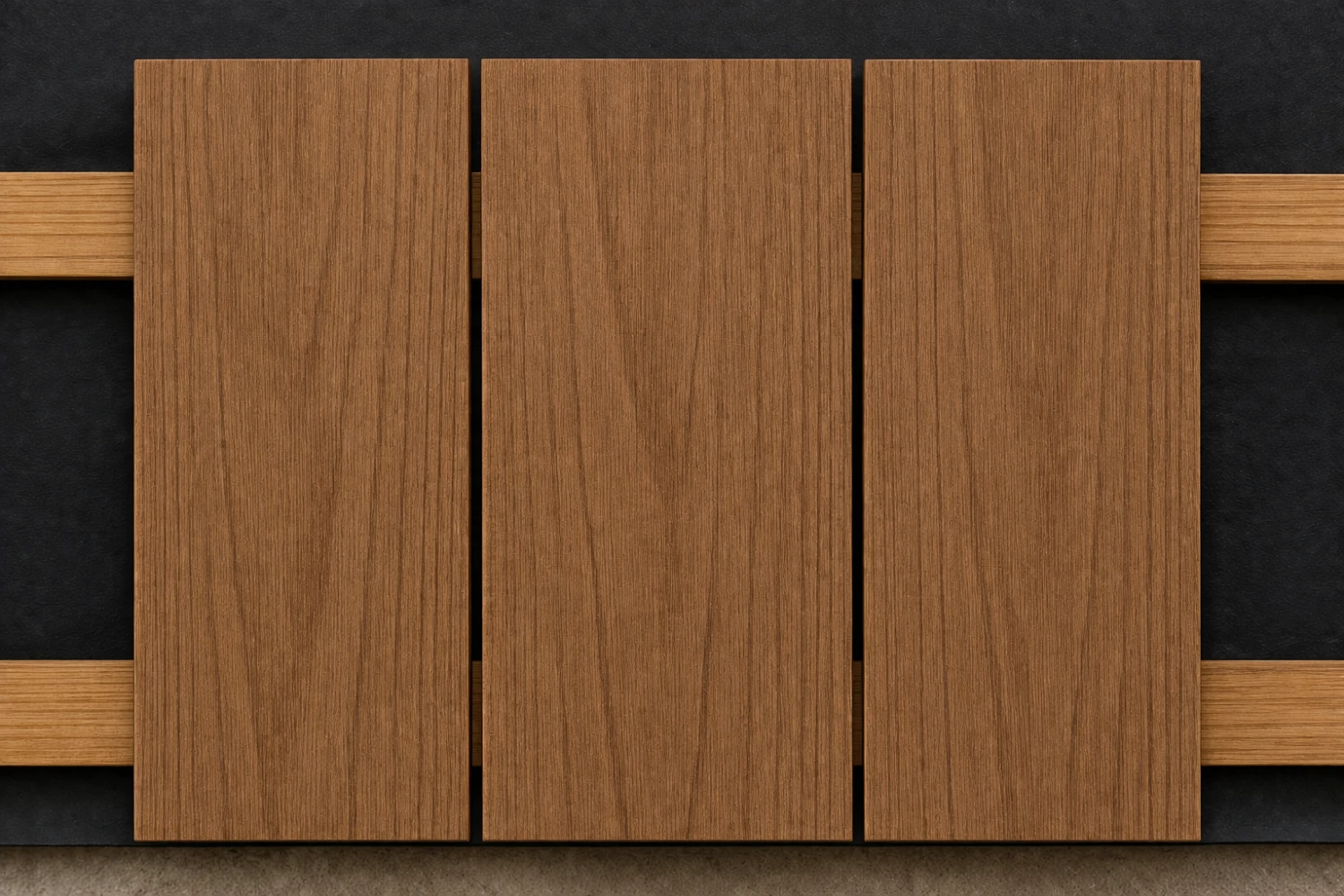
The performance of any façade system depends on installation.
Timber cladding should be installed over a ventilated cavity. The system should allow continuous airflow behind the boards and provide a clear drainage path at the base of the wall.
Board spacing must accommodate movement and support drainage. Fixings should be suitable for external use and selected for the timber, profile and environmental conditions.
These principles also apply to composite systems. Composite boards require their own allowance for thermal movement, fixing method and joint arrangement.
The timber cladding installation guidance sets out the core principles for ventilated cavities, drainage, spacing, fixings and site handling. Project-specific details should be confirmed before installation begins.
Which Material Is Better For A Façade?
Composite cladding may suit projects where reduced routine upkeep and a consistent manufactured finish are the main priorities. That benefit should be weighed against its limits. Lower-cost boards are widely reported to fade, chalk and delaminate over time, and once the surface has degraded it cannot be restored to look new again.
Higher-grade composite systems generally improve on this. They still offer an imitation of timber rather than the material itself. The visual effect is more controlled and uniform, but it lacks the natural grain, depth and tactile character of real wood.
Timber cladding is the stronger long-term material choice where appearance, repairability and lasting material quality matter. Real timber can weather naturally, or it can be maintained and brought back to a fresh appearance through sanding and refinishing over many years of use.
For Irish projects, thermally modified timber offers natural character with improved dimensional stability for exterior conditions. Avara® combines solid wood aesthetics with chemical-free thermal modification and in-house control over machining, texturing and finishing.
The final choice should reflect the building’s exposure, detailing, maintenance plan, fire requirements and intended appearance. Where the design intent is to achieve the look, feel and long-term value of real wood, timber is the clearer specification.
Discuss façade requirements with the Corell technical team.
Comparison At A Glance
| Consideration | Timber Cladding | Composite Cladding |
|---|---|---|
| Appearance | Authentic grain, texture, depth and natural variation | Manufactured wood-look surface with more uniform repetition |
| Moisture behaviour | Thermally modified timber offers comparable moisture resistance through full-section thermal modification rather than a bonded factory surface | Lower moisture absorption mainly when compared with untreated softwood, but achieved through a manufactured surface that cannot be restored |
| Dimensional movement | Reduced through thermal modification and correct detailing | Mainly influenced by temperature and installation |
| Maintenance | Inspection and possible coating maintenance, with the option to renew the surface | Usually cleaning and occasional inspection, but the surface finish cannot be renewed |
| Repairability | Can often be sanded, refinished or locally replaced | Deep damage usually requires board replacement |
| Weathering | Can weather naturally or retain colour through coatings, and can be refreshed over time | Lower-cost boards are widely reported to fade, chalk or delaminate, and the factory finish cannot be restored once lost |
| End of life | Solid wood can be reused or recycled, subject to treatments | Mixed composition can make recycling more complex |
| Material character | Natural, tactile and board-to-board varied | Engineered, consistent and imitative rather than natural |

© 2026 Corell Architectural Timber Ltd.
All rights reserved.